Replacing a Rotten Side Gate in Hedge End
The old gate had rotted at the base and lost a board. Here is how it was replaced with a new arched-top timber gate, keeping the original hinges.
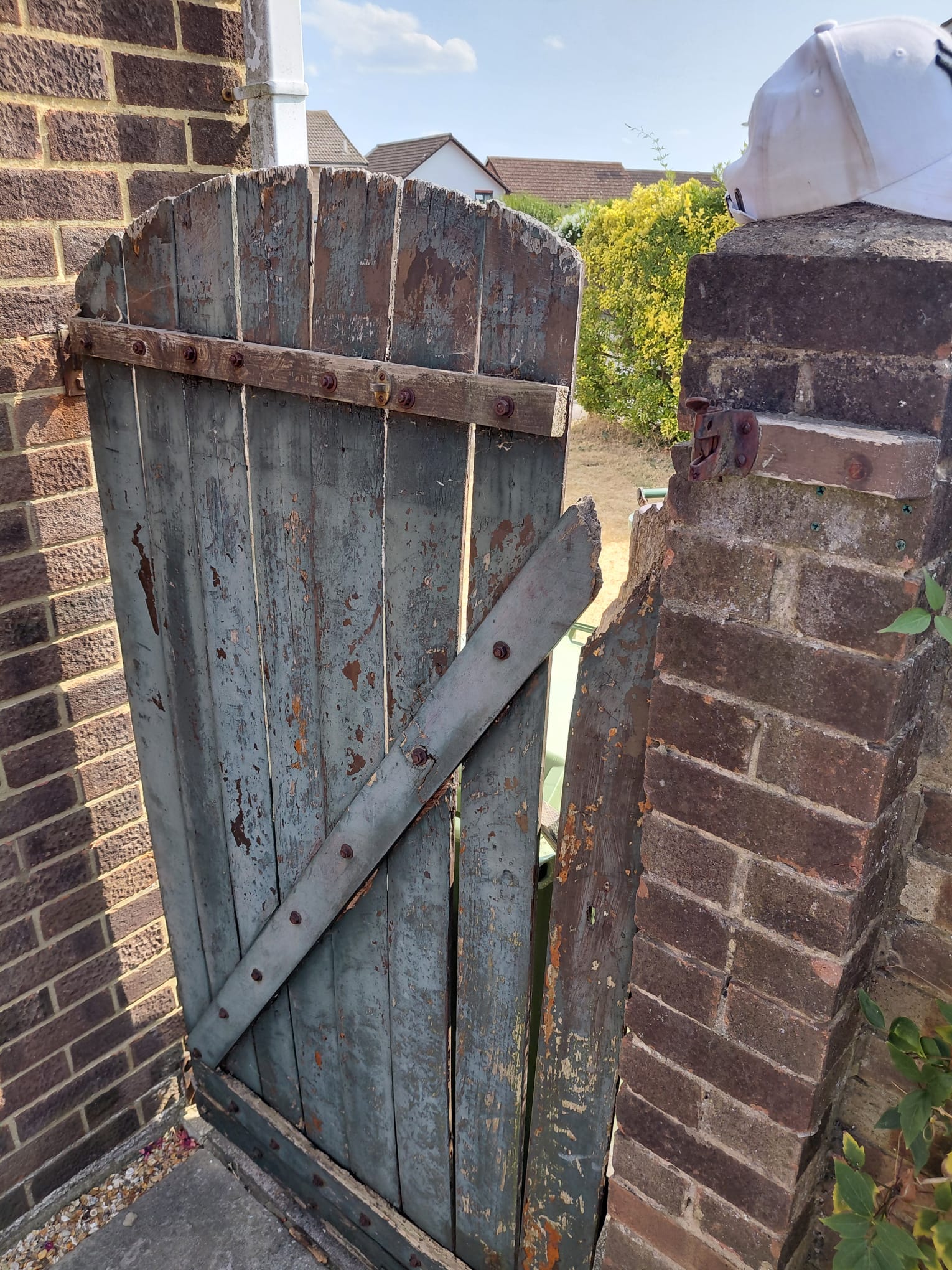
This side gate in Hedge End closes off the gap between the house and a brick pier. It had been painted many times over the years, and by the time Isaac saw it, it was not really doing its job any more.
What was wrong with the old gate
Paint protects timber only while it stays intact. Once it cracks, water gets in behind it and cannot get out, and the wood rots from the inside while the surface still looks painted. That is what had happened here. The bottoms of the boards had gone soft where they sat closest to the ground, the paint was peeling across the whole face, and the outer board on the latch side had split away completely, leaving a gap you could see straight through.
With that much rot at the base, patching one or two boards would not have lasted. The fixings into soft timber had nothing solid to grip, so the sensible answer was a new gate.
The new gate
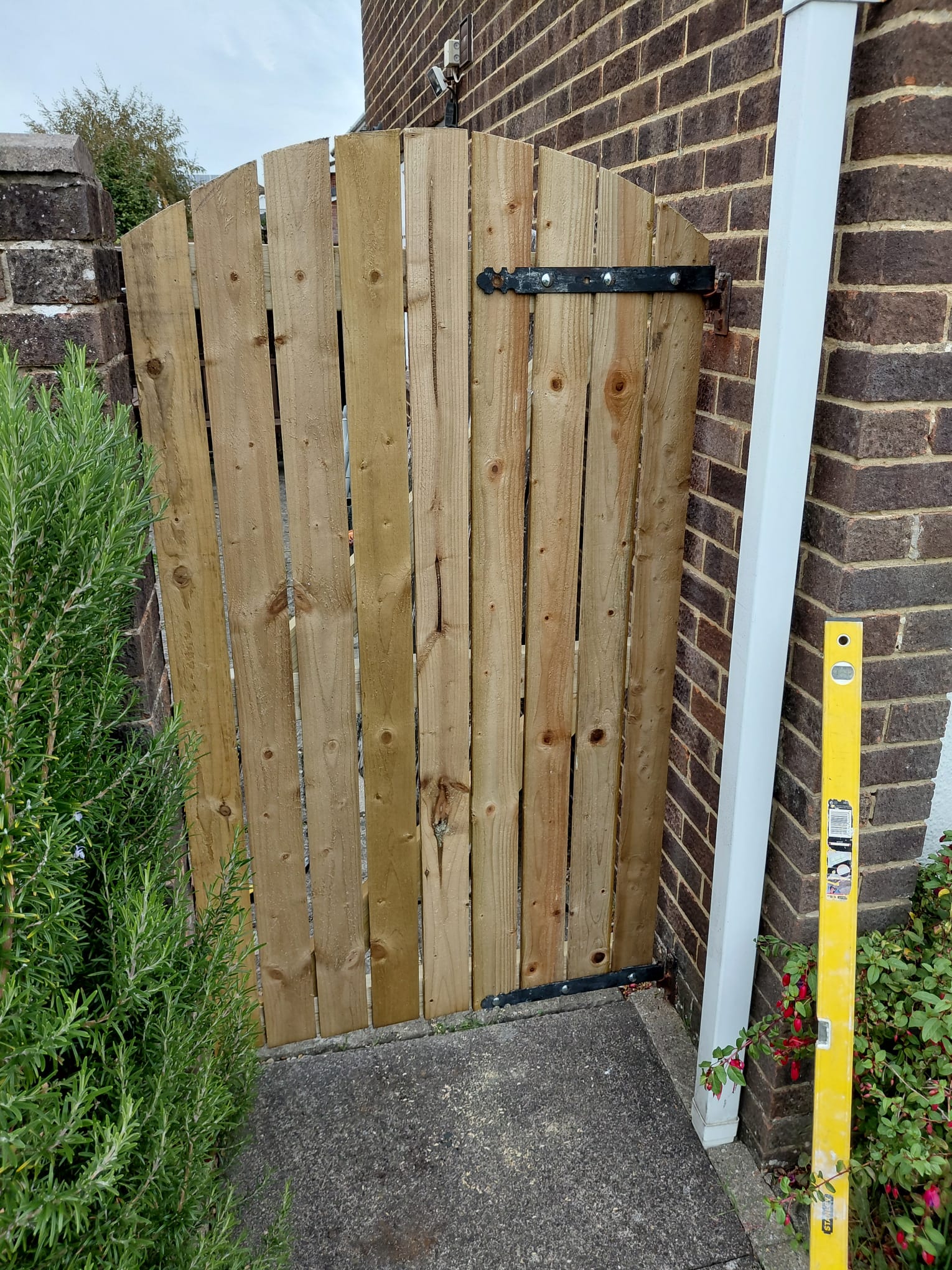
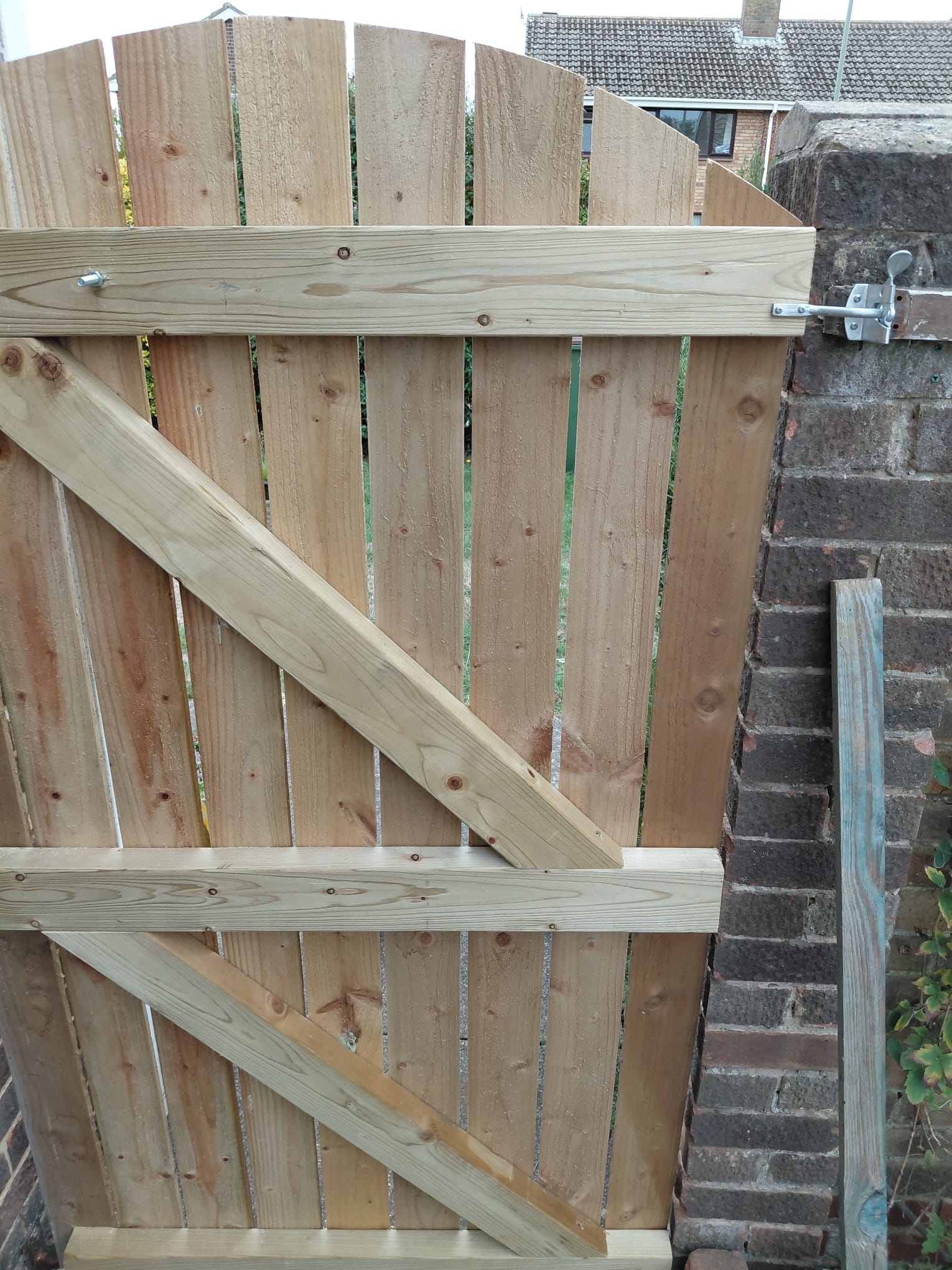
Isaac built a replacement from scratch in pressure-treated timber, matching the arched top of the original so it sits in the opening the same way and suits the house. The face is vertical boards; on the back, horizontal ledges and diagonal braces hold everything square.
Why the old hinges went back on
The original black T-hinges were still sound. Heavy strap hinges like these usually outlast the timber they are screwed to, so there was no reason to throw them away. Reusing them kept the cost down and kept the look the house already had.
Why it has been left natural
Pressure-treated timber does not need paint to survive outdoors, and leaving it bare avoids the exact problem that killed the old gate: a coat that traps water. The fresh green-gold colour will fade to a silver-grey over the next year or so. If the owners want a colour later, a breathable stain is the better choice than paint, applied once the timber has had time to dry out.
Is your gate worth saving?
Not every tired gate needs replacing. If the timber is firm when you press a screwdriver into the bottom of the boards, a repair is often possible. The guide linked below goes through the signs that point to a repair and the ones that mean it is time for a new gate.